The 1-hour-per-day credit cap
Texas rules credit a maximum of 60 minutes per day toward the 30-hour requirement, no matter how long your teen actually drove. LearnerLog decides which minutes count — and you can override it.
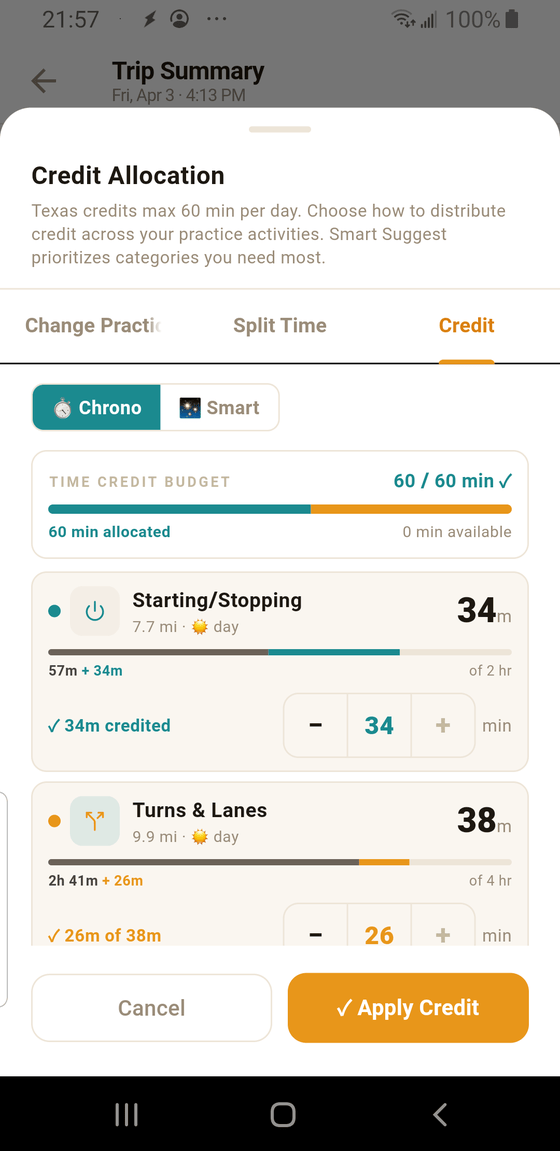
- 1 Why this screen exists. A 2-hour drive gives you 60 minutes of credit, not 120. How those 60 minutes split across the categories you practiced matters — it decides which TDLR-form rows get filled.
- 2 Chrono vs Smart. Chronological credits segments in the order they happened. Smart Suggest looks at what the TDLR form still needs and prioritizes those categories. Either is valid; Smart is usually faster toward a complete log.
- 3 60 / 60 min budget. The maximum. The bar fills as credit is allocated; a checkmark means all 60 minutes are spent (the ideal). If the bar isn't full, you drove for less than 60 minutes that day.
- 4 Per-category steppers. Use − and + to take minutes from one category and give them to another. The total stays at 60. Use this to squeeze more rows out of a single drive.
Why Texas caps it at 60 minutes
The TDLR 30-hour rule is designed for consistent practice over weeks, not a single 8-hour road-trip crunch. If a parent could credit 8 hours in one Saturday, a teen could technically "complete" the 30 hours in four weekends — which isn't the intent. The per-day cap forces spaced practice, which is what actually builds safer drivers.
"Chrono" vs "Smart" in practice
Chronological is honest to the drive: if the first 20 minutes were Expressway, those 20 minutes go to Expressway, regardless of whether Expressway already has enough rows on the TDLR form.
Smart Suggest is strategic: it looks at which categories on the TDLR form still need rows and biases credit toward those. For example, if your Expressway row is already complete but Backing needs 2 more rows, Smart will credit the drive's Backing minutes before its Expressway minutes. Nothing is fabricated — it only shifts credit among categories the drive actually practiced.
Does uncredited time "disappear"?
The time still shows up in your drive history and the Trips tab (so the parent can see the real hours driven), but only the credited 60 minutes count toward the TDLR 30-hour total. Think of this as two parallel tallies: real practice (for you) and credited hours (for DPS).